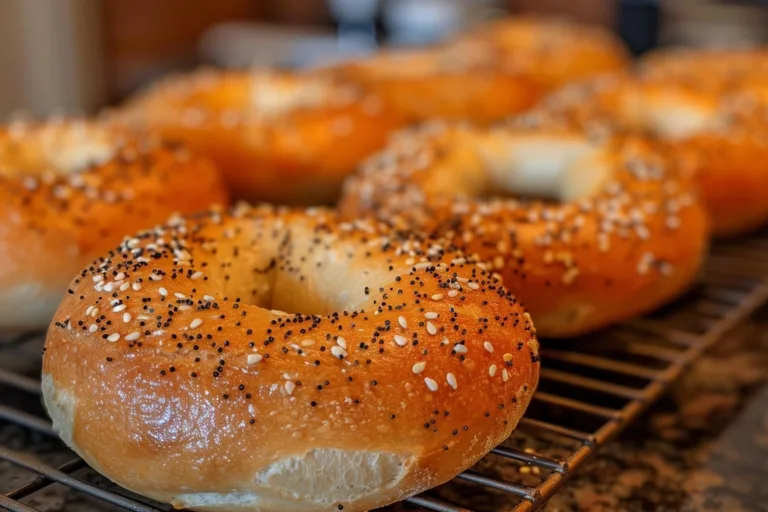
Traditional boiled bagels offer a chewy, dense texture achieved through a unique combination of boiling and baking. The dish highlights the interplay of simplicity and technique, using flour, yeast, honey, and salt to craft a timeless baked good. Perfect for pairing with morning coffee or briny toppings, these bagels deliver a satisfying crunch and soft interior with every bite.
| Prep Time | 1 hour | |
|---|---|---|
| Cook Time | 30 minutes | |
| Total Time | 1 hour 30 minutes | 1 hour 30 minutes |
| Servings | 12 | |
| Difficulty | Moderate | |
| Cuisine | Jewish/Eastern European |
Why This Recipe Works
Traditional boiled bagels thrive on a method that bridges fermentation and thermal shock. Boiling the dough creates a glossy crust, while baking locks in that signature chewiness. The honey glaze adds subtle sweetness and sheen, elevating the rustic appeal. I’ve tested multiple techniques, and this balance remains unmatched for authenticity and texture. For vegans or those avoiding alcohol, swapping honey for maple syrup maintains the finish without compromising dietary needs.
Ingredients
| Ingredient | Quantity | Notes |
|---|---|---|
| Flour | 10 cups | All-purpose or bread flour recommended for structure. Substitute with whole wheat flour for a nuttier flavor. |
| Active Dry Yeast | 2¼ teaspoons | Replace with bread machine yeast if preferred. Avoid instant or rapid-rise yeast to preserve texture. |
| Honey | ¾ cup | Use raw honey for depth. Replace with maple syrup, corn syrup, or golden syrup in a pinch. |
| Salt | 3½ tablespoons | Finely ground Himalayan pink salt enhances flavor. Omit if using salted butter for shaping. |
Step-by-Step Instructions
Phase 1: Making the Dough
- Combine flour, 1½ tablespoons salt, and yeast in a large bowl.
- Add 5½ cups warm water (105°F / 40°C) with ¼ cup honey, mixing until no lumps remain.
- Knead the dough on a floured surface for 10 minutes until smooth and elastic.
- Cover and let rise in a warm, draft-free area until doubled in size (45–60 minutes).
Phase 2: Shaping the Bagels
- Punch down the dough and divide into 12 equal pieces (about 4–5 ounces each).
- Roll each piece into a ball, then poke a hole (1–2 inches wide) to form a ring shape.
- Rest shaped bagels on parchment paper for 15–20 minutes at room temperature.
Phase 3: Boiling the Bagels
- Boil a large pot of water with 3 tablespoons honey and 1½ tablespoons salt (145–160°F / 63–71°C).
- Submerge 2–3 bagels at a time for 30–45 seconds each side, gently moving them to avoid sticking.
- Transfer boiled bagels to a baking sheet, spacing them 1 inch apart.
Phase 4: Baking the Bagels
- Preheat oven to 425°F (218°C) and place a rack on the lower third.
- Brush each boiled bagel with an egg yolk-honey glaze and bake for 20–25 minutes.
- Rotate the tray halfway through for even browning. Transfer to a wire rack to cool completely.
Chef Tips for Perfect Results
- Use a thermometer for boiling water to maintain 145–160°F (63–71°C). Too hot = rubbery texture, too cold = lackluster crust.
- Rest shaped bagels briefly; this relaxes gluten for even browning during baking.
- Score the top of each ring with a sharp knife before boiling to guide dough expansion.
- Brush the glaze in quick, thin strokes—it hardens faster than traditional egg wash due to honey’s properties.
Common Mistakes to Avoid
- Overproofing: Dough becomes gummy and tough if risen too long. Fix: Use a kitchen timer and check at 45 minutes.
- Boiling too long: Prolonged boiling creates a dense, spongy texture. Solution: Stick to 30–45 seconds per side as per the recipe.
- Skipping oven steam: Without added humidity, crust remains flat. Create steam by placing a pan of water in the oven during baking.
- Using incorrect flour: Cake flour yields a cakey texture. Ensure bread or all-purpose flour for proper structure.
Variations and Substitutions
| Ingredient | Substitution | Impact on Flavor |
|---|---|---|
| Flour | Whole wheat | Enhances earthiness; reduces chew. May require extra water. |
| Honey | Maple syrup | Adds mild caramel notes. Slightly less glossy finish. |
| Salt | Coarse sea salt | Amplifies crunch on the surface. Distribute evenly during baking. |
Serving Suggestions and Pairings
Traditional boiled bagels pair seamlessly with savory toppings: cream cheese, avocado, or grilled egg. For breakfast, serve alongside smoked salmon and tomato slices. At dinner, they complement matzoh ball soup’s brothy richness. These bagels also shine unadorned at brunch with coffee or as part of a festive holiday table.
Storage and Reheating
| Method | Duration | Instructions |
|---|---|---|
| Freezer (sealed bags) | 2–3 months | Allow bagels to cool completely. Freeze baked or boiled; reheat in a 350°F oven for 5 minutes to restore crunch. |
| Refrigerator (airtight container) | 3–4 days | Store cooled bagels. Reheat in a toaster or oven to avoid sogginess. |
| Oven | Immediate | To refresh, bake at 375°F (190°C) on a parchment-lined tray for 8–10 minutes. |
Nutritional Information
| Nutrient | Amount per Serving |
|---|---|
| Calories | 260 |
| Protein | 8g |
| Fat | 2g |
| Carbohydrates | 55g |
| Fiber | 3g |
| Sugar | 9g |
| Sodium | 450mg |
Frequently Asked Questions
Can I substitute honey with corn syrup?
Yes, corn syrup replaces honey in the glaze and boiling water. Expect a slightly less robust flavor but a similar glossy finish.
How do I know when bagels are done baking?
Press the sides gently during baking; if resistant and bounces back slowly, they’re ready. Internal temperature should reach 200°F (93°C).
Why is my dough sticky?
Adjust flour hydration: add 1 tablespoon at a time while kneading. Warm water encourages hydration, while cool water slows it.
Can I freeze dough for later boiling?
Chill shaped, unboiled bagels on a tray before freezing. Boil directly from frozen for an extra 10-second boil; adjust baking time as needed.
What’s the best time to eat traditional bagels?
They’re ideal for breakfast, but serve cooled for picnics or fresh for sandwiches. Avoid reheating pastries in a microwave to preserve texture.
Conclusion
Making traditional boiled bagels demands patience but rewards with a taste of culinary heritage. The honey-enhanced boiling process ensures a glossy, chewy texture perfect for toppings or standalone enjoyment. Whether you’re a seasoned baker or a curious beginner, this recipe offers a satisfying blend of technique and tradition. Once mastered, share the flavor of history with every bite.
Print
Traditional Boiled Bagels: A Classic Comfort Food
- Prep Time: 60
- Cook Time: 30
- Total Time: 90
- Yield: 12 bagels 1x
- Category: General
- Method: Boiling and baking
- Cuisine: Jewish/Eastern European
- Diet: Vegetarian
Description
These traditional boiled bagels have a chewy, dense texture and glossy crust from their unique boil-bake method. Made with flour, yeast, honey, and salt, they offer a soft interior. Perfect for pairing with coffee or briny toppings. Swap honey with maple syrup for a vegan option.
Ingredients
10 cups all-purpose flour
2¼ teaspoons active dry yeast
¾ cup honey
3½ tablespoons salt
Instructions
Combine flour, 1½ tablespoons salt, and yeast in a large bowl.
In another container, add 5½ cups warm water (105°F / 40°C) with ¼ cup honey and mix well.
Combine the liquid mixture with the dry ingredients, stirring until no lumps remain.
Knead the dough on a floured surface for 10 minutes until smooth and elastic.
Place the dough in a bowl, cover, and let rise in a warm area for 45–60 minutes.
Punch down the dough and divide into 12 equal pieces (about 4–5 ounces each).
Roll each piece into a ball and poke a small hole in the center to form a ring shape.
Let the shaped bagels rest on parchment paper for 10–15 minutes.
Bring a large pot of water to a boil and add a pinch of salt for flavor.
Carefully add the bagels to the pot in batches, boiling for 1 minute per side until they float.
Preheat an oven to 450°F (230°C) and place a baking sheet inside to heat up.
Remove the boiled bagels and gently toss them in a honey glaze made from ½ cup honey and 1–2 tablespoons water.
Place the bagels on the preheated baking sheet and bake for 20 minutes.
Rotate the pan halfway through baking for even browning.
Let cool before serving.
Notes
Use bread flour for best texture or substitute all-purpose with whole wheat flour for a nuttier flavor.
Avoid instant or rapid-rise yeast; they compromise the chewy texture.
If using salted butter to shape, omit the 3½ tablespoons salt in the dough.
Storage: Keep in an airtight container for up to 5 days or freeze for up to 3 months.
Nutrition
- Serving Size: 1 bagel
- Calories: 300
- Sugar: 17g
- Sodium: 300mg
- Fat: 5g
- Saturated Fat: 0g
- Carbohydrates: 55g
- Fiber: 3g
- Protein: 12g
- Cholesterol: 0mg