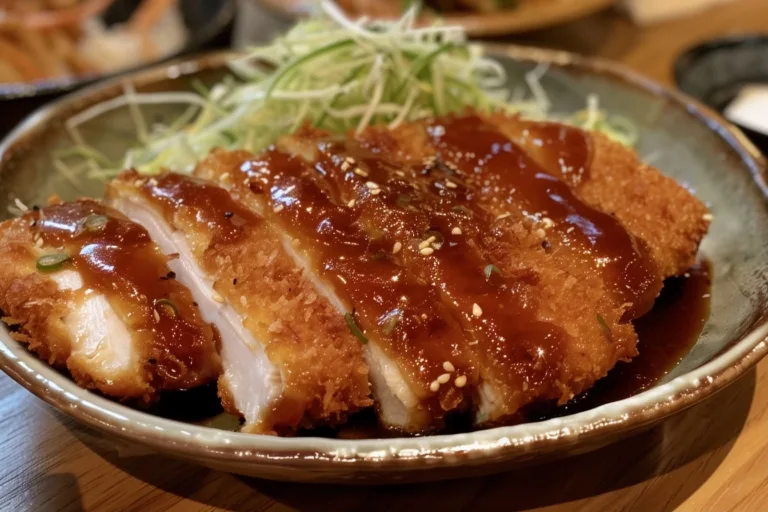
Chicken katsu sauce is a tangy, savory, and slightly sweet condiment that provides the essential flavor profile for Japanese breaded cutlets. This traditional thick brown sauce combines fruity notes with a deep umami base to complement the crunch of panko breadcrumbs. You can easily make this restaurant-quality accompaniment in your own kitchen using simple pantry staples within minutes.
| Prep Time | Cook Time | Total Time | Servings | Difficulty | Cuisine |
|---|---|---|---|---|---|
| 5 min | 5 min | 10 min | 4 | Easy | Japanese |
Why This Recipe Works
This recipe balances the acidity of Worcestershire sauce with the sweetness of ketchup to create a perfectly emulsified condiment. Many commercial versions taste overly processed, but this homemade approach highlights fresh aromatics and preserves the necessary thickness to cling to the meat.
You will appreciate the consistency of this sauce which prevents the breading from becoming soggy. I frequently use this exact ratio when hosting dinner parties because it appeals to both children and adults while maintaining an authentic profile consistent with authentic Japanese cooking techniques.
Ingredients
| Ingredient | Quantity | Notes |
|---|---|---|
| Ketchup | 4 tbsp | Provides the base body |
| Worcestershire Sauce | 2 tbsp | Use a non-alcoholic brand |
| Oyster Sauce | 1 tbsp | Adds deep savory notes |
| Sugar | 1 tsp | Granulated white sugar works best |
Step-by-Step Instructions
Preparation and Mixing
- Combine the ketchup, Worcestershire sauce, oyster sauce, and sugar in a small glass mixing bowl.
- Whisk the ingredients vigorously until the sugar granules dissolve completely into the liquid mixture.
- Taste the mixture and adjust the sugar content if you prefer a sweeter profile.
Refinement
- Transfer the sauce to a small serving ramekin for individual plates or a boat for communal dining.
- Rest the sauce for five minutes to allow the flavors to marry before serving alongside hot katsu.
Chef Tips for Perfect Results
- Use high-quality Worcestershire sauce to ensure the depth of flavor is not lost during the mixing stage.
- Avoid reheating the sauce directly in a pan; serve it at room temperature to preserve its texture.
- Add a tiny pinch of ginger powder if you desire a warm, subtle spice undertone.
- Ensure your oyster sauce is fully incorporated so you do not get concentrated pockets of saltiness.
Common Mistakes to Avoid
- Using too much sugar creates an cloying sweetness that masks the delicate notes of the oyster sauce.
- Adding water thins the sauce, which makes it slide right off the crispy exterior of the chicken.
- Skipping the resting period prevents the chemical balance of the ingredients from fully stabilizing for maximum flavor.
- Using a low-quality brand of ketchup will result in an artificial tang that dominates the profile.
Variations and Substitutions
| Ingredient | Substitution | Impact on Flavor |
|---|---|---|
| Sugar | Honey | Adds subtle floral notes |
| Oyster Sauce | Hoisin Sauce | Makes the sauce earthier |
| Ketchup | Tomato Paste | Increases the richness intensity |
Serving Suggestions and Pairings
Serve this sauce alongside golden-brown chicken katsu, shredded cabbage, and steaming white rice for a classic teishoku meal. It is also an excellent pairing for deep-fried shrimp or firm tofu cutlets during weeknight dinners. For a sophisticated touch, serve with a side of pickled ginger to cleanse the palate between bites.
Storage and Reheating
| Method | Duration | Instructions |
|---|---|---|
| Refrigerator | 1 Week | Keep in an airtight glass jar |
| Freezing | Not Recommended | Texture separates and loses quality |
Nutritional Information
Approximate values per serving.
| Nutrient | Amount per Serving |
|---|---|
| Calories | 45 |
| Sodium | 380mg |
| Carbohydrates | 9g |
| Sugar | 7g |
Frequently Asked Questions
Can I make this chicken katsu sauce gluten-free?
Yes, you can substitute the Worcestershire and oyster sauces with certified gluten-free versions. Always check the labels because traditional formulations use wheat-based ingredients as stabilizers.
How do I fix a sauce that tastes too acidic?
You can fix an acidic sauce by adding a half-teaspoon of sugar at a time until the bite softens. This balances the pH levels and creates a more rounded, palatable finish.
Should the sauce be warm or cold?
The sauce should be served at room temperature to ensure the flavor profile remains distinct and clean. Serving it hot can degrade the fresh acidity of the tomato base.
Can I add spices to the recipe?
You can add spices like white pepper or paprika to customize the heat profile of the sauce. Start with small amounts to avoid overpowering the base ingredients.
Is this recipe suitable for meal prep?
You can prepare this sauce up to one week in advance and store it in the refrigerator. This allows the ingredients to develop a deeper complexity before you serve them.
Creating homemade chicken katsu sauce transforms a simple meal into an authentic Japanese dining experience. By controlling the quality of your ingredients, you guarantee a balance of tangy and savory notes that pairs beautifully with crunchy textures. Enjoy the process of crafting this quick staple and elevating your next dinner! Learn more about the science of tonkatsu flavor profiles to further refine your culinary skills.
Print
Authentic Japanese Chicken Katsu Sauce
- Prep Time: 5
- Cook Time: 5
- Total Time: 10
- Yield: 4 servings 1x
- Category: General
- Method: Whisking
- Cuisine: Japanese
- Diet: Pescatarian
Description
This homemade chicken katsu sauce is a tangy, savory, and perfectly balanced condiment essential for Japanese-style breaded cutlets. With a rich umami base and a hint of sweetness, this restaurant-quality sauce clings perfectly to crispy panko breadcrumbs without making them soggy. Made with simple pantry staples, this alcohol-free and pork-free recipe comes together in minutes to elevate your home-cooked meals.
Ingredients
4 tbsp ketchup
2 tbsp non-alcoholic Worcestershire sauce
1 tbsp oyster sauce
1 tsp granulated white sugar
Instructions
Combine the ketchup, Worcestershire sauce, oyster sauce, and sugar in a small glass mixing bowl.
Whisk the ingredients vigorously until the sugar granules dissolve completely.
Taste the mixture and adjust the sugar content if a sweeter sauce is preferred.
Transfer the sauce to a serving ramekin or sauce boat.
Rest the sauce for five minutes to allow the flavors to marry before serving.
Notes
Ensure you use a certified non-alcoholic Worcestershire sauce brand. Serve at room temperature for the best texture. For a subtle warm undertone, you can add a small pinch of ginger powder. Ensure the oyster sauce is fully whisked in to prevent concentrated pockets of flavor.
Nutrition
- Serving Size: approx 2 tablespoons
- Calories: 35
- Sugar: 7g
- Sodium: 380mg
- Fat: 0g
- Saturated Fat: 0g
- Carbohydrates: 8g
- Fiber: 0g
- Protein: 0.5g
- Cholesterol: 0mg